
成果专栏
Author Information

Fiona Sun is a current 11th-grade student with a profound interest in the intersections of religion, culture, and law. Known for her strong communicative abilities, she seeks to deepen her academic knowledge in these fields while continuing to refine her analytical writing and expressive skills. For inquiries or further discussion regarding her research.
Contact Email: FionaSun.33@outlook.com
A Field Study of Ottoman Mosque Complexes in Istanbul and Edirne
Abstract:
This paper investigates how Ottoman mosque complexes (külliyes) in Istanbul and Edirne have transformed from multifunctional social institutions into spaces that simultaneously serve religious, cultural, and tourism purposes. The study is based on field observations at major sites, including the Süleymaniye Mosque and the Selimiye Mosque. Through the observation of structures, visitors, and contemporary usage in these sites, this paper examines how these spaces adapt to modern tourism while continuing to function as centers of worship.
Keywords: Ottoman mosque complexes, religion, tourism, culture
Introduction
Ottoman mosque complexes, or külliyes, functioned as the core of urban life in early modern Ottoman cities. They integrated religious, social, and economic purposes within a single architectural framework, shaping not only the landscape but also the daily operation of society. In cities such as Istanbul and Edirne, these complexes were not merely places of worship but institutions that held fundamental social functions, ranging from education to welfare. However, modern development and transitions, especially the rise of centralized governance and global tourism, have significantly altered the functions of mosques. While Ottoman mosque complexes have partially maintained their roles as social foundations through continued religious functions, their broader social and economic roles have been continuously transformed in the modern era.
In the early modern Ottoman period, mosque complexes served as multifunctional centers of daily life. Major complexes such as the Süleymaniye Mosque and the Selimiye Mosque were deliberately designed to integrate religion, education, and charity services into one single system. As Suraiya Faroqhi explains, the külliye combined religious, educational, and charitable functions (Faroqhi, 2005). This highlights that these religious structures were not limited to worship and religious usages but also had other social functions. Ottoman külliyes were also designed as integrated social units. Necipoğlu argues that Ottoman külliyes functioned as integrated social systems rather than isolated religious buildings (Necipoğlu, 2005). This integration included schools, hospitals, kitchens, bathhouses, and market places. All of these different institutions are integrated together, all functioning to serve the urban populations nearby. In this sense, the külliye operated as a “city within the city,” organizing both the spiritual and material life of its people.
The waqf system played a crucial role in sustaining these institutions. According to Amy Singer, “waqf endowments ensured the continuous provision of services such as food, education, and medical care” (Singer, 2008). Singer further argues that “Ottoman charitable endowments (waqf) constituted an enduring monument to imperial mosque complexes structured urban space and daily life beneficence and were important instruments of policy.” This financial structure allowed külliyes to operate independently, ensure long-term stability, and enable the Ottoman state to provide social welfare through religious institutions rather than direct government administration.
The Süleymaniye Mosque complex, built in the sixteenth century under Sultan Suleiman the Magnificent and designed by Mimar Sinan, provides a clear example of this system. Singer notes that imarets provided daily food distribution to the poor, travelers, and students (Singer, 2002). These kitchens were not symbolic but essential welfare institutions that supported thousands of people. Similarly, the Selimiye Mosque complex in Edirne functioned as both a religious structure and a center of education. Historian Suraiya Faroqhi emphasizes that “these complexes were central to the social and economic life of Ottoman cities” (Faroqhi, 2005). Beyond their physical functions, külliyes shaped societal development and reinforced imperial power and authority, as argued by Howard Crane that imperial mosque complexes structured urban space and organized daily life (Crane, 1991). This demonstrates that Ottoman mosque complexes were foundational to how cities functioned socially and economically.
Beyond social and charity functions, mosques also had important political functions in society. Ottoman sultans commissioned monumental külliyes to demonstrate imperial authority. The construction of large complexes such as the Süleymaniye Mosque was also an expression of the power and wealth of the Ottoman Empire. These structures reminded residents of the sultan's role as a political ruler, clearly visible to all. Their size and sophistication illustrate the stability and benevolence of society and the government. By funding education, welfare, and religious activities through mosque complexes, Ottoman rulers strengthened their relationship with communities and reinforced citizens’ loyalty to the state. Consequently, külliyes are crucial tools in demonstrating and maintaining political authority.
In the modern era, certain aspects of mosque complexes’ societal functions have persisted despite major transformations. The mosque complexes in Istanbul and Edirne continue to function as religious spaces, maintaining their role as centers of worship and gathering. Daily prayers, Friday congregations, and religious festivals are still held in these mosques, gathering the local populations to form around these structures. Beyond ritual practice, mosques continue to foster social interaction and cultural identity. Even in a reduced capacity, they remain spaces where communities gather and maintain shared cultural values. This reflects their evolving role as both religious and cultural institutions. Despite modernization, mosques remain central to identity formation. They continue to symbolize unity and a common belief of the people in a rapidly changing environment. In this sense, although their functional roles have changed, their symbolic and social importance remains similarly significant.
However, the extent of continuity is limited by significant structural differences. One of the most important changes was the decline of the waqf system and the rise of centralized governance during the nineteenth and twentieth centuries. As modernization reforms expanded, many of the functions once managed by mosque complexes were transferred to the government instead. Amy Singer notes that “the role of waqf institutions declined with the rise of centralized state systems” (Singer, 2008). Education became part of standardized state schooling systems, while healthcare shifted to modern hospitals. As a result, the mosques lost their role as a provider of social welfare. Zeynep Çelik further argues that “modernization fragmented the integrated functions of Ottoman religious complexes” (Çelik, 1986). This fragmentation meant that institutions that were once physically and functionally unified became separated into multiple, modern systems. Mosques remained, but their surrounding institutions lost their original interconnected structure. As a result, these religious structures no longer functioned as self-sustaining social systems. Instead, they became primarily religious buildings, with reduced involvement in education, healthcare, and economics.
In the modern period, the expansion of global tourism has further reshaped these complexes. Iconic sites such as the Süleymaniye and Selimiye mosques have become major landmarks, attracting international visitors and generating economic value. UNESCO identifies the Selimiye Mosque complex as a World Heritage Site of outstanding universal value. As heritage scholar David Lowenthal argues, heritage sites increasingly function as economic resources as well as places of memory. This transformation reflects a shift in the function of the mosques from active religious institutions to cultural monuments that contribute to local and national economies. In many cases, mosque complexes now serve multiple functions simultaneously. While still functioning as places of worship, they also leave out spaces for tourism. Visitor management systems, guided tours, and restricted access during prayer times demonstrate this role in tourism. Areas that once served daily community needs are now often preserved for historical value. They are increasingly interpreted through the lens of history, architecture, and national identity rather than as an everyday gathering space. As a result, mosque complexes now operate under the restrictions of tourism and economic value alongside their religious functions.
Methodology
This research combines literature review and field observation to investigate the changing functions of Ottoman mosque complexes in contemporary Turkey. Fieldwork was conducted between February 2 - 8, 2026, in Istanbul and Edirne. The primary research sites included the Süleymaniye Mosque and the Selimiye Mosque.
The research employed three methods. First, direct observation was used to document visitor behavior, spatial organization, and interactions between worshippers and tourists. Second, Photographic records were taken to document architectural layouts, tourist supporting facilities and spatial utilization patterns. Third, informal conversations with local people, visitors, and mosque staff provided additional contextual information.
Field notes were recorded daily and later compared with secondary academic sources to identify patterns of continuity and transformation in the functions of Ottoman mosque complexes.
Findings
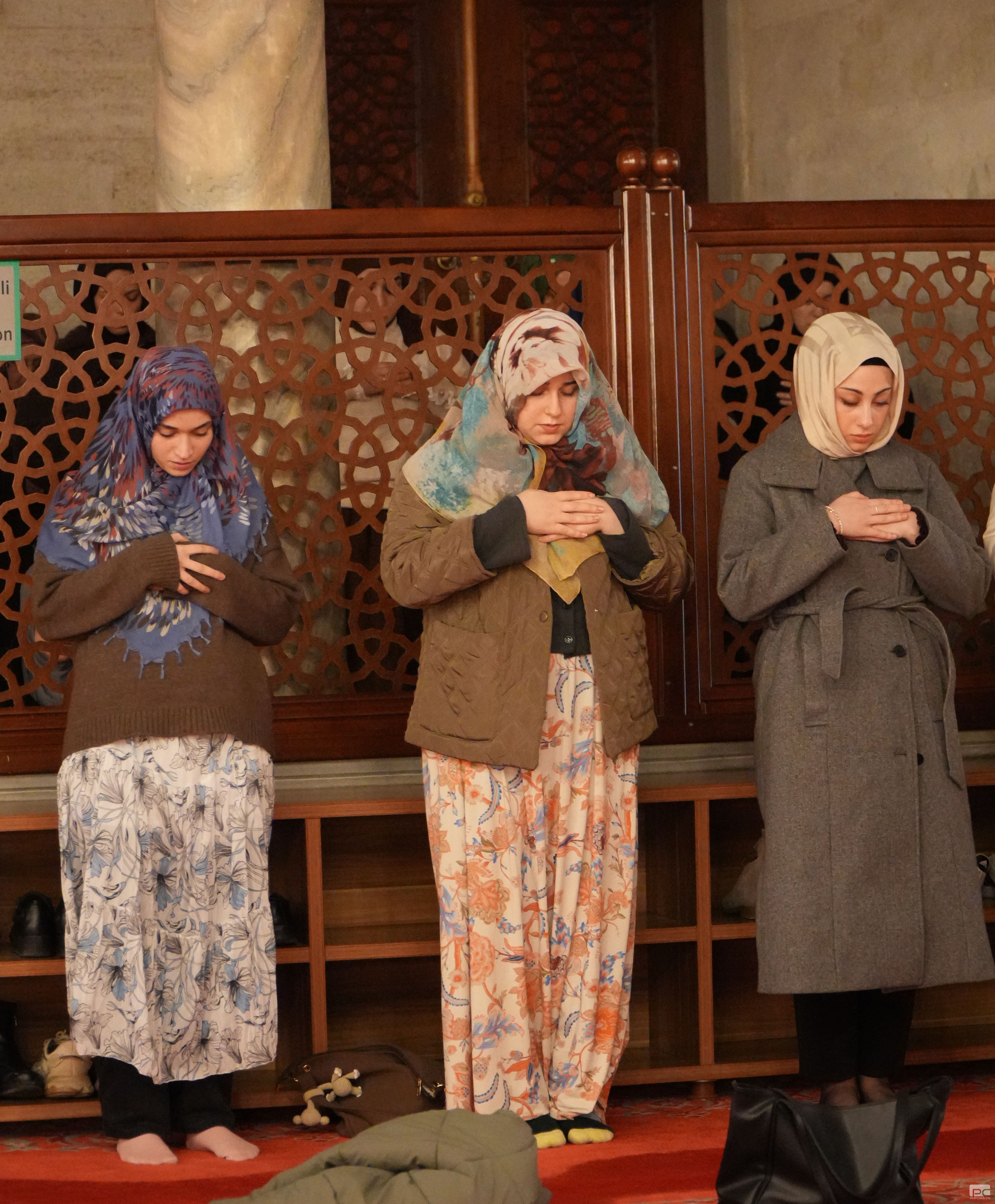 Field observations in Istanbul and Edirne vividly illustrate this transformation. Inside the mosques duringprayer times, the environment was deeply spiritual and focused. Worshippers stood in organized rows, creating a strong sense of unity and discipline. However, the massive number of tourists present alongside the religious activities struck a stark contrast. Tourists were separated from where the religious activities were taking place. Only low barriers were present, and some tourists actually ignored the rules and crossed into the forbidden sections. But for most mosques, guards were present and would remind the tourists of the rules.For example, when several tourists andthe researcher accidentally removed their headscarves, a guard politely approached to remind them that it was necessary to wear headscarves inside the mosques. Outside the mosque, the atmosphere was also significantly different. The courtyards and surrounding areas were filled with tourists, guides, and photography groups. Many tourists swarmed the surrounding area, coming from different regions. Thesound of guides describing the history behind each structure and symbol filled the air. The researcher also encountered a group of tourists from Turkey. Informal conversations revealed that they were from a rural region in Turkey, coming to visit the Süleymaniye Mosque.Another notable observation was the way modern infrastructure has been incorporated into these historic spaces. Signs, tourist pathways, security checkpoints, and multilingual guides were visible throughout the mosques. Many tourist signs were present all around the surrounding areas.Many signs contained multiple languages signaling the directions to different mosques, leading the tourists into the visiting areas. There are also ticket-selling booths, guards, and security checkpoints leading into the mosque complexes.
Discussion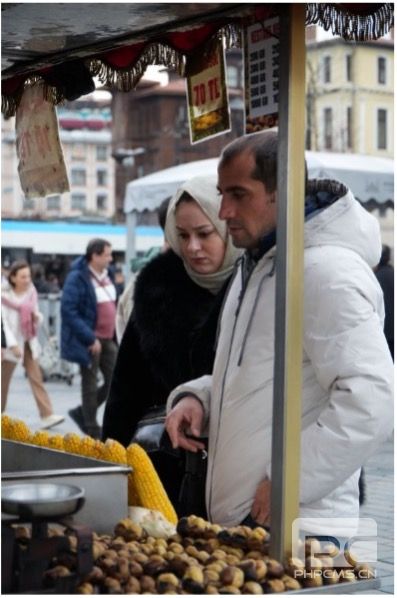
The empirical findings reflect the enduring religious function of the mosque complexes even through the significant transformation they underwent. The continued religious use of these mosques demonstrates how they remain important to local religious life. However, the massive influx of tourists and the infrastructure built to accommodate these tourists highlight the importance of the mosque for economic, cultural, and historical purposes. While they may have been centers for worship, modern visitors now view them as historical landmarks. These different perspectives demonstrate how mosques continue to adapt to a changing society. These observations align with academic interpretations of Ottoman mosque complexes as evolving institutions. Rather than disappearing or losing relevance, they have adapted to new social and economic conditions. However, with the changing roles of these mosque complexes, problems such as tourists not following religious rules are also brought to light.
Conclusion
Ottoman mosque complexes in Istanbul and Edirne have maintained their roles as social foundations only to a limited extent. While their continued use as religious spaces and symbols of identity reflects important continuity, their original functions as comprehensive providers of social welfare have largely diminished. Ultimately, Ottoman mosque complexes illustrate the tension between preservation and transformation in urban spaces. They remain powerful symbols of cultural and religious identity, yet their functional role in everyday social life has been fundamentally redefined.
Works Cited
- Çelik, Zeynep. The Remaking of Istanbul: Portrait of an Ottoman City in the Nineteenth Century. University of California Press, 1986.
- Crane, Howard. “The Ottoman Sultan's Mosques: Icons of Imperial Legitimacy.” The Ottoman City and Its Parts: Urban Structure and Social Order, edited by Irene A. Bierman et al., Aristide D. Caratzas, 1991, pp. 173–243.
- Faroqhi, Suraiya. Subjects of the Sultan: Culture and Daily Life in the Ottoman Empire. I.B. Tauris, 2005.
- Lowenthal, David. The Heritage Crusade and the Spoils of History. Cambridge UP, 1998.
- Necipoğlu, Gülru. The Age of Sinan: Architectural Culture in the Ottoman Empire. Princeton UP, 2005.
- Singer, Amy. Constructing Ottoman Beneficence: An Imperial Soup Kitchen in Jerusalem. State University of New York Press, 2002.
- Singer, Amy. Charity in Islamic Societies. Cambridge UP, 2008.
- United Nations Educational, Scientific and Cultural Organization (UNESCO). “Selimiye Mosque and Its Social Complex.” UNESCO World Heritage Centre, whc.unesco.org/en/list/1366.Im
Author Information
Fiona Sun is a current 11th-grade student with a profound interest in the intersections of religion, culture, and law. Known for her strong communicative abilities, she seeks to deepen her academic knowledge in these fields while continuing to refine her analytical writing and expressive skills. For inquiries or further discussion regarding her research.
Contact Email: FionaSun.33@outlook.com
嘉宾介绍-Guest Introduction(点击链接查看详情)(Click the link for more details)
简介-Introduction

新兴国家影像传媒文化论坛The New Emerging Countries International Media Forum
2023年恰逢共建“一带一路"倡议提出10周年。为响应习近平同志提出“加强和改进国际传播工作"的要求,打造全球化语境下的专业跨界交流平台,首届新兴国家影像传媒文化论坛(以下简称“新兴国家传媒论坛")计划于2023年3月31日至4月2日在中国四川省德阳市及菲律宾马尼拉等地同步举行。
The year 2023 coincides with the 10th anniversary of the joint construction of the “Belt and Road” Initiative. In order to create a professional cross-border communication platform in the context of globalization in 2023, The New Emerging Countries International Media Forum is scheduled to be held in Deyang(About 100 kilometers away and one hour's drive from Chengdu), Sichuan Province, China and Manila, Philippines from March 31 to April 2, 2023.
指导单位 Guiding Institution
中国外文局
China International Communications Group (CICG)
主办 Hosts
菲律宾文化艺术委员会
National Commission for Culture and the Arts of Philippines (NCCA)
中国外文局文化传播中心
Center for International Cultural Communication, China International Communications Group (CICC)
中科院《中国国家地理》杂志社
Chinese National Geographic
中国记协国际部
International Liaison Department of ACJA
举办地主办方 Hosts
中共德阳市旌阳区委
Jingyang District Committee of Deyang City of the CPC
德阳市旌阳区人民政府
People's Government of Jingyang District, Deyang City
策划及承办 Organizers
真实影像传媒
Real Image Media
《中国国家地理》影视中心(全景国家地理)
CNGTV
中国外文局文化传播中心数字文化推广部
Digital Culture Promotion Department of CICC
菲律宾亚洲对话中心
Asian Dialogue Center, the Philippines
德阳袈圆文化旅游发展有限公司
DJY Cultural
届时,跨文化交流、环境与新能源、乡村振兴与全球减贫、数字文化与元宇宙、Mins国际短视频大赛发布、影像与传媒国际合作、气候变化与食物变革、全球儿童发展、交互艺术与教育、和平影像暨政社合作的国际救灾与救援等十一个主题论坛将悉数亮相。
Twelve thematic forums such as cross-cultural communication, environment and new energy, rural revitalization and global poverty reduction, digital culture and meta-universe, Mins International Short Film Competition, international cooperation of image and media, climate change and food change, global child development, interactive art and education, peace image and international disaster relief and rescue of political and social cooperation will be presented. The Sustainable Minerals and Global Supply Chain Forum will be the highlight for the medias' attention.